Korean Supercomputer Specifications Computing Speed: A Deep Dive
Understanding the capabilities of modern high-performance computing (HPC) is crucial for advancements across numerous scientific and industrial sectors. The landscape of supercomputing is constantly evolving, with each generation pushing the boundaries of what is computationally possible. In this detailed exploration, we will delve into the Korean supercomputer specifications and their computing speed, offering insights into the hardware, architecture, and performance metrics that define these powerful machines. We will examine the key components, the theoretical peak performance, and the real-world applications where this immense computing power is leveraged. This analysis aims to provide a comprehensive overview for anyone interested in the cutting edge of computational technology and the role Korean supercomputers play on the global stage.
The Evolution of Korean Supercomputing Power
Korea has consistently invested in developing and deploying advanced supercomputing infrastructure, recognizing its strategic importance. Early efforts laid the groundwork, leading to the current generation of powerful systems. The journey from early parallel processing machines to the petaflop and soon exaflop era systems showcases a remarkable progression in both hardware design and software optimization. This evolution is not merely about raw speed but also about the efficiency, scalability, and accessibility of these resources for researchers and industries.
Key Components Driving Computing Speed
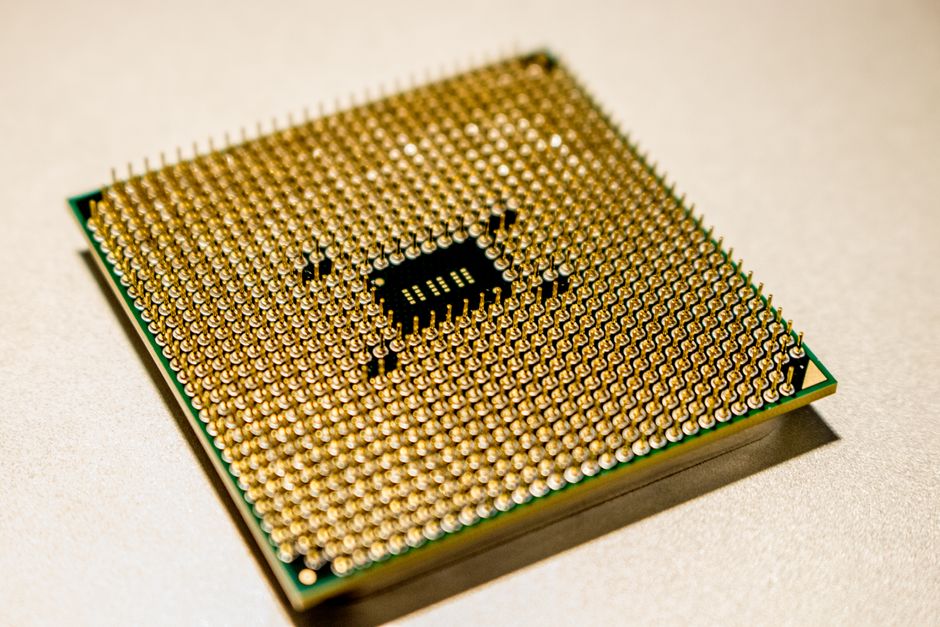
The impressive computing speed of any supercomputer, including those in Korea, is a result of the synergistic integration of several critical hardware components. At the forefront are the central processing units (CPUs) and increasingly, the graphics processing units (GPUs). CPUs provide the general-purpose processing power, handling a wide array of tasks and orchestrating the overall computation. GPUs, originally designed for graphics rendering, have proven exceptionally adept at parallel processing, making them indispensable for the massively parallel workloads common in scientific simulations and AI.
High-speed interconnects are another vital element. These networks, such as InfiniBand or custom-designed fabrics, enable rapid communication between thousands, or even tens of thousands, of processing nodes. Without efficient inter-node communication, the performance of a distributed supercomputer would be severely hampered, creating bottlenecks that negate the benefits of having numerous processors. The overall performance of Korean supercomputer specifications is heavily reliant on these high-bandwidth, low-latency interconnects.
Storage systems also play a significant role. Supercomputers generate and process vast amounts of data. Therefore, high-performance, parallel file systems are essential to ensure that data can be accessed and written quickly without becoming a performance bottleneck. The integration of fast solid-state drives (SSDs) and robust storage architectures contributes directly to the effective computing speed by minimizing data I/O delays. The Korean supercomputer specifications often highlight their sophisticated storage solutions.
Measuring Supercomputing Performance: FLOPS and Benchmarks
The primary metric used to quantify supercomputing speed is FLOPS (Floating-point Operations Per Second). This measures how many floating-point calculations a system can perform in one second. Supercomputers are typically categorized by their performance in terms of MFLOPS (MegaFLOPS), GFLOPS (GigaFLOPS), TFLOPS (TeraFLOPS), PFLOPS (PetaFLOPS), and increasingly, EFLOPS (ExaFLOPS).
Theoretical Peak vs. Sustained Performance
It’s important to distinguish between theoretical peak performance and sustained performance. Theoretical peak FLOPS represent the maximum computational capacity achievable under ideal conditions, assuming all processing units are utilized at their maximum frequency and efficiency for floating-point calculations. However, real-world applications rarely achieve this theoretical maximum due to various factors such as communication overhead, memory access limitations, and algorithmic inefficiencies.
Sustained performance, often measured through standardized benchmarks, provides a more realistic indication of a supercomputer’s actual capabilities. The TOP500 list, a prominent ranking of the world’s most powerful supercomputers, uses the LINPACK benchmark to assess sustained performance. This benchmark measures how quickly a system can solve a dense system of linear equations, a task representative of many scientific computations. Examining the LINPACK performance of Korean supercomputer specifications gives a clearer picture of their practical computational speed.
Korean Supercomputers: Notable Systems and Their Capabilities
Korea operates several state-of-the-art supercomputing facilities, crucial for national research and development. These systems are housed in national research institutes and universities, supporting a wide range of scientific disciplines. For instance, the National Supercomputing Center (NSCC) at KIST (Korea Institute of Science and Technology) has historically been a key player in providing HPC resources.
Example: The Architecture of a High-Performance Korean System
Let’s consider a hypothetical, yet representative, advanced Korean supercomputer. Such a system might feature tens of thousands of high-core-count CPUs, such as Intel Xeon or AMD EPYC processors, coupled with hundreds or even thousands of accelerators like NVIDIA GPUs. The inter-processor communication would likely be managed by a high-performance network fabric, ensuring that data flows efficiently between nodes. The total number of processing cores could easily exceed several hundred thousand, contributing to a peak theoretical performance in the tens or hundreds of PFLOPS.
The Korean supercomputer specifications for such a system would detail its memory capacity, which can be in the hundreds of terabytes, and its high-speed storage subsystem, capable of delivering terabytes per second of I/O bandwidth. These specifications are meticulously documented to allow researchers to effectively utilize the system’s resources. Understanding these Korean supercomputer specifications is key to appreciating their scientific potential.
Applications of Korean Supercomputing Power
The immense computing power offered by Korean supercomputers is instrumental in driving innovation and scientific discovery across a multitude of fields. These machines enable researchers and engineers to tackle problems that were previously intractable due to computational complexity.
Scientific Research and Development
In fundamental scientific research, supercomputers are used for complex simulations in areas like climate modeling, astrophysics, molecular dynamics, and particle physics. For example, climate scientists use these systems to run high-resolution models that predict future climate scenarios, aiding in policy-making and disaster preparedness. In astrophysics, they simulate the formation of galaxies and the behavior of black holes, pushing the boundaries of our understanding of the universe.
Furthermore, materials science benefits greatly from HPC. Researchers can use supercomputers to simulate the properties of novel materials at the atomic level, accelerating the discovery of new catalysts, superconductors, and advanced alloys. This process significantly reduces the need for expensive and time-consuming physical experimentation, a testament to the efficiency gains from advanced Korean supercomputer specifications.
Artificial Intelligence and Big Data Analytics
The rapid advancements in artificial intelligence (AI) and machine learning (ML) have created a massive demand for computational resources. Training deep learning models, especially those with billions of parameters, requires immense parallel processing capabilities. Korean supercomputers, with their substantial GPU acceleration, are ideally suited for these tasks. They enable the development of more sophisticated AI algorithms for applications ranging from natural language processing and computer vision to drug discovery and autonomous driving.
The analysis of big data also relies heavily on supercomputing. Whether it’s genomic data analysis for personalized medicine or the processing of sensor data from smart cities, these systems can handle and analyze datasets of unprecedented scale, extracting valuable insights and patterns. This area highlights the practical impact of high Korean supercomputer specifications on technological advancement.
The Future of Korean Supercomputing
The pursuit of exascale computing, systems capable of performing at least one exaflop (10^18 FLOPS), is a global endeavor, and Korea is actively participating. The development of next-generation supercomputers will involve even more powerful processors, advanced interconnect technologies, and novel architectural designs. There is also a growing focus on energy efficiency, as the power consumption of supercomputers is a significant concern.
Furthermore, the integration of AI-specific hardware and software is becoming increasingly common. These advancements are driven by the realization that future scientific and industrial challenges will require tightly coupled HPC and AI capabilities. The ongoing investment in supercomputing infrastructure by the Korean government and research institutions ensures that the nation remains at the forefront of computational science and technology. The continuous evolution of Korean supercomputer specifications promises even greater breakthroughs in the years to come.
Challenges and Opportunities
Despite the remarkable progress, challenges remain. The cost of building and maintaining these advanced systems is substantial. Moreover, developing efficient software that can fully exploit the capabilities of massively parallel architectures is an ongoing research area. The skills gap, in terms of personnel trained to operate and program these complex machines, is another area requiring attention.
However, these challenges also present opportunities. Investments in HPC education and training programs can help bridge the skills gap. Research into novel computing paradigms, such as quantum computing, alongside continued advancements in classical supercomputing, will shape the future of computation. The strategic importance of supercomputing for national competitiveness and scientific leadership will undoubtedly drive further innovation in Korean supercomputer specifications and their applications.
🔗 Korean supercomputer specifications computing speed 연관 인기 가이드
📚 References & Official Sources
❓ Frequently Asked Questions
What is the typical performance unit for supercomputers?
The typical performance unit for supercomputers is FLOPS (Floating-point Operations Per Second), often measured in PFLOPS (PetaFLOPS) or EFLOPS (ExaFLOPS).
How does GPU acceleration affect Korean supercomputer specifications?
GPU acceleration significantly boosts computing speed by providing massive parallel processing power, crucial for AI and complex simulations, making it a key component in modern Korean supercomputer specifications.
What are the main applications of supercomputing in Korea?
Supercomputing in Korea is vital for scientific research (climate modeling, astrophysics), AI development, big data analytics, and national R&D initiatives across various industries.